
What is a chatbot? What does it mean, and how do I use it?
Digital assistants represent both the present and the future of text analysis, application development, and the execution of routine tasks. We utilized a Google AI digital assistant (a QA assistant) to examine the responses it would generate based on the annual letters written by the renowned investor Warren Buffett to his shareholders.
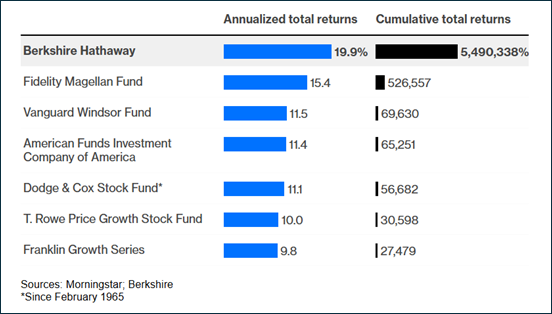
Warren Buffett is one of the most popular investors, with an exceptional track record spanning nearly 60 years.
Warren Buffett | Berkshire Hathaway
By using a state-of-the-art chatbot, you can obtain answers in the form of summaries—derived from the analysis of vast amounts of text data—in just a few seconds.
AI assistants (QA Assistants) are excellent text analysis tools—similar to ChatGPT (What is ChatGPT)—capable of generating targeted summaries of legal, medical, scientific, financial, and many other types of texts containing vast amounts of information.
Furthermore, if the texts—as sources of information—originate from a specific company or organization, as in our example, we can create a profile of that entity, or even track how its responses and definitions have evolved over time.
Below are “summaries” generated by the same Google Gemini chatbot model we use, regarding the term “risk-free”—that is, free from financial risk. These summaries are the bot’s output based on Warren Buffett’s annual letters to his shareholders.
We can observe the varying approach to the term “risk-free” depending on when the annual letter was written. However, we note that the conclusions drawn by the bot regarding the term “risk-free” are consistent and specific:
- Stocks and bonds, as investment choices, always involve risk.
- High inflation creates an unstable economic environment.
- High volatility is often mistakenly equated with high risk.
- Uncertainty is an inherent characteristic of the economy in the short term.
- The notion that bonds carry less risk than stocks is mistaken.
Here are the answers from Google’s digital assistant (chatbot):
Warren Buffett:
My friend, the concept of a “risk-free” investment is a dangerous illusion for any investor. While government bonds are often considered risk-free, in practice they are not, because their return is affected by inflation and unexpected economic shifts.
A seemingly secure 10% yield on a long-term bond might appear attractive, but high inflation could erode the real return—potentially even turning it negative. The longer the bond’s duration, the greater this risk becomes. Investing requires careful consideration of all risks, not merely the risk of issuer default. In the real economy, there is no such thing as a zero-risk investment.
Warren Buffett:
In investing, risk is not defined by beta (a Wall Street parameter for volatility) but by the probability that an investment will cause its holder to lose purchasing power over the intended holding period.
This means that an asset may exhibit significant price fluctuations without being considered high-risk, provided it is highly likely to offer increasing purchasing power over time. Conversely, an asset that does not show significant fluctuations could be extremely high-risk.
Warren Buffett:
In the context of investments, the term “risk” refers to the possibility that the actual return on an investment will differ from the expected return. This includes the possibility of losing part or all of the initial investment.
Your text addresses this issue by stating: “This forecast comes with a warning: anything can happen to stock prices tomorrow.” This highlights the inherent uncertainty and the possibility of unexpected outcomes in stock market investments.
Warren Buffett:
In the context of investments, the term “risk-free” refers to an investment where the probability of failing to achieve the objective—namely, greater consumption at a future date—is minimal. However, the text suggests that even so-called “risk-free” long-term bonds can be riskier than common stocks under certain conditions, such as inflation. The text also notes that, in the short term, stocks are riskier than short-term government bonds.
The annual letters to Berkshire Hathaway shareholders selected for the “summaries” ranged from 2004 to 2024.
Learn more about chatbots: How to use ChatGPT