Anveto Safety Core
Bridging the Gap Between Maintenance and Compliance
Businesses in Greece and Europe are facing new regulatory changes. Under the European CSRD Directive and Greek Law 5164/2024, corporate sustainability (ESG) reporting is no longer a matter of communication and marketing; rather, non-compliance entails a strict legal obligation.
| CSRD (Legislation & Implementation) | ESRS (Indicators & Standards) |
| Legal framework for businesses. | Regulatory and technical data framework with specific specifications. |
| It defines the scope, deadlines, and auditing rules. | It defines the technical framework for the collection and presentation of ESG data. |
| By legal advisors to companies and Boards of Directors. | Database engineers, Chief Sustainability Officers (CSOs), and auditors. |
For large organizations, shipping companies, and businesses in general, the real challenge lies not merely in understanding the regulatory framework, but in data collection and implementation. Traditional ESG tools rely on spreadsheets—which are prone to human error—and typically fail to withstand rigorous audits.
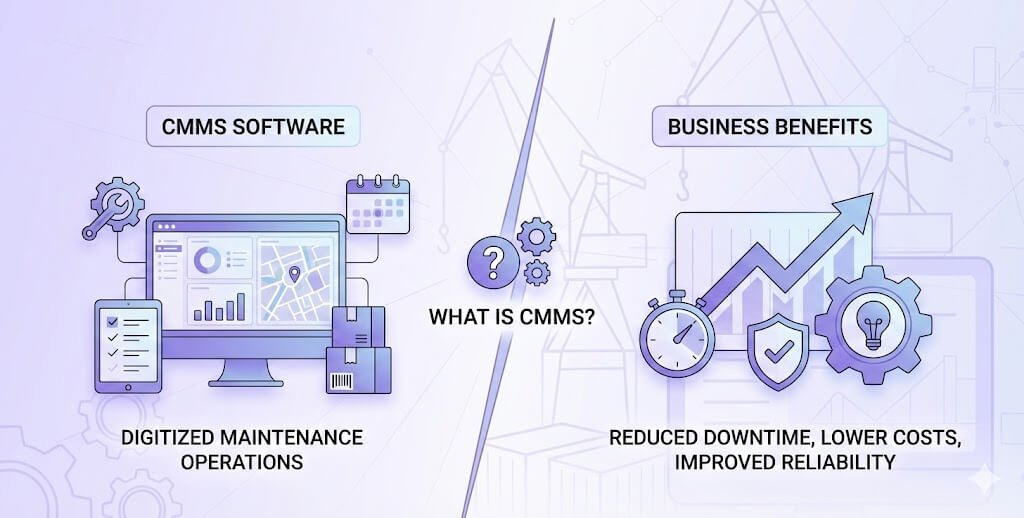
Anveto Safety Core provides the ultimate solution. Whether as a standalone compliance tool or a native ESG add-on module designed for the Anveto CORE OS, it transforms routine technical maintenance and field operations into automated, audit-ready compliance data.
Compliance: How Safety Core Meets CSRD & ESRS Standards
The CSRD directive defines which companies are required to report, while the European Sustainability Reporting Standards (ESRS) specify the measurements and metrics. Anveto Safety Core integrates these technical rules directly into your workflows—as well as those of your assets:
ESRS S1: Own Workforce (Health & Safety)
- Digital Permit to Work (PTW): The system automatically blocks high-risk maintenance tasks within Anveto CORE OS until the necessary safety checklists and Lockout-Tagout (LOTO) protocols are completed and digitally signed.
- Automated Accident Indicators: If an incident is recorded at the plant or on the vessel, the system processes it in real time, automatically calculating mandatory European indicators such as the LTIFR (Lost Time Injury Frequency Rate).
- Certification & Training Verification: Safety Core cross-references technician IDs with their active certifications (e.g., STCW for maritime crews), ensuring that unauthorized personnel do not gain access to hazardous assets.
ESRS E1 & E2: Climate Change & Pollution
- Operational Emissions: By recording machinery operating times, fault logs, and overhauls within your CMMS, Safety Core supplies accurate quantitative data for your company’s Scope 1 and Scope 2 reports.
- Industrial Waste Traceability: Whenever a technician records a repair involving hazardous materials, chemical waste, or refrigerant gases, Safety Core creates an immutable digital waste disposal trail.
ESRS G1: Business Conduct & Governance
- Audit-Ready Data Lineage: Auditors can click on any ESG data point on the corporate dashboard and trace it back to the specific maintenance work order that generated it. This eliminates the risk of “greenwashing,” as there is an indisputable audit trail.
Designed with Anveto Marketers’ DNA: Zero bloatware, native integrations.
- 100% Interoperable: It acts as a bridge between your workflows and the accounting department. Through our integrations with leading market ERPs (SoftOne, Entersoft, Pylon), field safety data is instantly converted into financial risk indicators.
- Zero-Bloatware Layout: We design custom, lightweight layouts tailored to your organizational structure. Headquarters (HQ) views overall ESG performance across multiple sites or vessels, while local managers see only their specific operational checklists.
- The Global Flex-Export: Although developed based on the European ESRS standard, the platform includes a one-click data mapper. This allows you to export your data with a single click into global formats as well, such as GRI or the investor-focused ISSB.
To Which Businesses Will It Apply Immediately, and When?
The obligation is being introduced gradually, based on size and whether the company is listed on the stock exchange:
| Year of Implementation | Category of Eligible Businesses |
| From 2024 | Large public-interest entities with more than 500 employees (e.g., banks, insurance companies, large listed companies). |
| From 2025 | All other large enterprises meeting two of the three criteria: Assets > €25 million, Turnover > €50 million, Staff >250 persons. |
| From 2026 | Small and medium-sized enterprises (SMEs) listed on the stock exchange (again excluding listed micro-enterprises). |
| From 2028 | Subsidiaries of companies from third countries (outside the EU) that have a large turnover in Europe. |
Why ESG Will Change Smaller Businesses Too
Although the law does not directly mandate it, a company of 10–15 people might need to gather some basic ESG data.
1. Supply Chain Pressure
Large Greek companies (major supermarket chains, industrial firms, telecommunications providers)—numbering around 1,500—are legally required to report the footprint of their entire supply chain. If a small business with 10 or 15 employees acts as a supplier to one of these firms, the large company will request ESG data (such as recycling practices, environmental metrics, staff insurance coverage, etc.). If the small business fails to provide this information, it risks losing a major client.
2. Bank Loans and Financing
Greek banks are being rigorously evaluated on the “greenness” of their loan portfolios. This means that even a small business seeking a loan or financing through ESPA or the Recovery Fund will find the bank examining key ESG criteria before approving the funds.
3. Tourism and Exports
Small and medium-sized Greek hotel or export businesses collaborating with major foreign tour operators or international buyers are already facing pressure to demonstrate their adherence to sustainability standards.
Find out if your business is exposed. Turn routine technical maintenance into your strongest compliance asset. Contact Anveto Marketers today.